
 Lessons: 18Length: 55 minutes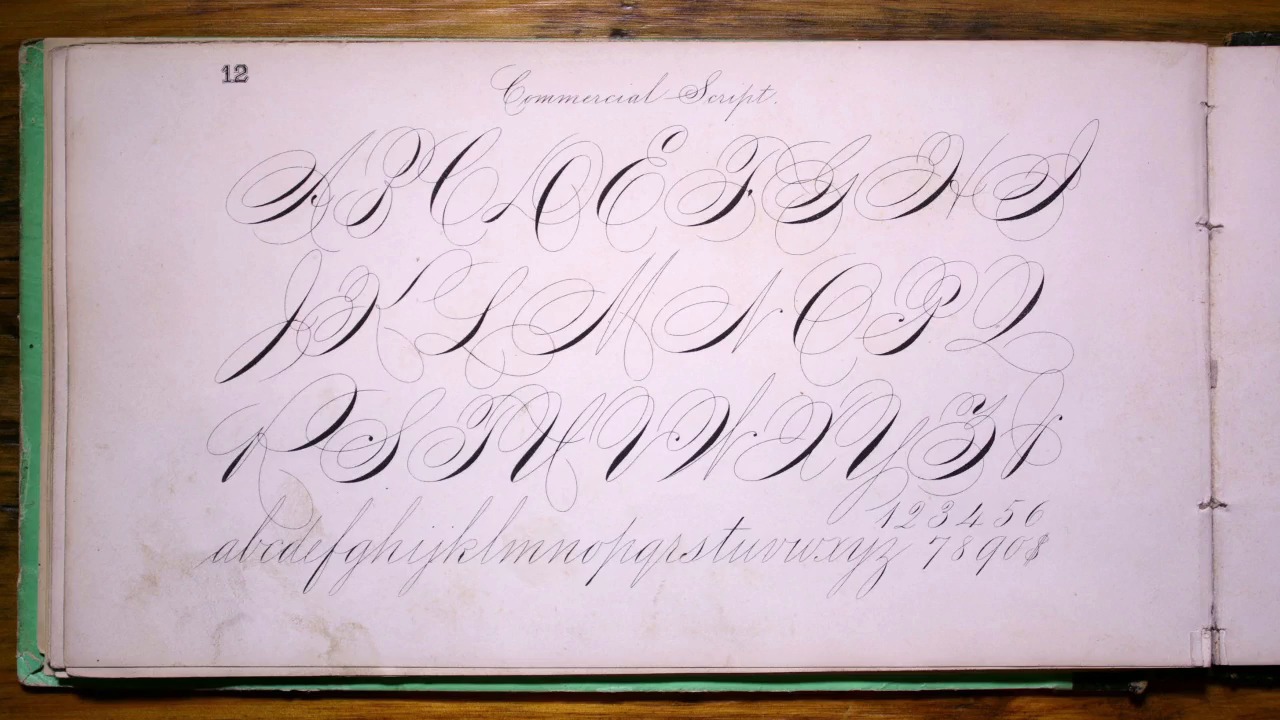
- Overview
- Transcript
1.3 What Is Script Lettering?
No drawing just yet! Let’s cover the history and basics of informal and formal script lettering. We’ll dive into the origins of the formal letterforms that we’ll be drawing throughout the course.
Related Links
1.Introduction
1.1Introduction01:22
1.2Supplies01:01
1.3What Is Script Lettering?02:33
2.Formal Script Lettering
2.1Breaking Things Down02:10
2.2Understanding the Proper Angle08:02
2.3Smooth Connections02:52
2.4Thicks and Thins03:18
2.5Flourishing04:28
2.6Uppercase01:52
2.7Extremum Vectoring02:49
3.Informal Script Lettering
3.1Utilizing Handwriting05:03
3.2Varying Angles and Rhythm03:26
3.3Stabbing Connections01:45
3.4Alternate Letterforms04:27
3.5Process to Final02:09
3.6Vector Techniques04:42
3.7Further Research01:59
4.Conclusion
4.1Conclusion00:43
1.3 What Is Script Lettering?
So let's discuss a little history before we begin drawing. So script lettering is essentially any type of letter form that connects to another by an exit and an entry stroke. So here are a couple examples of informal script lettering that I've Recently done. I tend to draw more informal styles because of the variety and the energy that I can integrate into each piece. But time to dive into a bit more history, so you can understand the origins. So the formal script letter forms that we will focus on. Were extremely popular around the 17th and 18th century within European countries. The overall letterform structure was created by utilizing a flat nib or a pointed nib pen. And this means that the letters were calligraphed or written in one or two strokes of the pen, rather than drawn and built up over time like we will be using with a pencil. But scripts such as round hand, Spencerian and copper plate are all considered formal scripts because of the construction, and the methods to the form of the letters. All of them were written with a pointed neb and ink. These letter forms generally have a specific slope at an angle around 50 plus degrees. Like 52, 53, if varies between penmen and in the speed that she wants to write at. But if you're wondering where you can see those examples, maybe like the Declaration of Independence. That was written in like a Copper Plate style script, or even the Coca-Cola logo contains some sort of characteristics of Spencerian script. But on the other hand we have informal script which is much more flexible. It has some roots within formal script such as letter form construction, but has the ability to be completely unique from it's origin, such as the overall speed, composition, color, size, and other factors vary within informal script. Altering the width and the angle, the size, the contrast, other characteristics of a letter form. That can create unique informal script, letter forms. And you can essentially create almost anything you can think of. You'll truly grasp the difference between both the forms as we progress through the course. So I'll see you in chapter two, where we begin to draw the formal script lettering.


