
 Lessons: 18Length: 55 minutes
- Overview
- Transcript
2.6 Uppercase
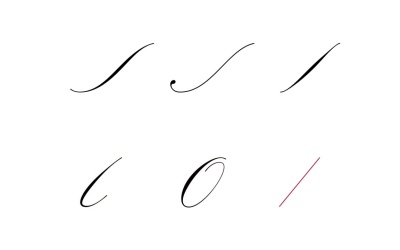
Just as we did with the lowercase forms, we will break down the uppercase forms into separate shapes: six this time. Those six shapes will allow you to create the entire uppercase alphabet.
1.Introduction
1.1Introduction01:22
1.2Supplies01:01
1.3What Is Script Lettering?02:33
2.Formal Script Lettering
2.1Breaking Things Down02:10
2.2Understanding the Proper Angle08:02
2.3Smooth Connections02:52
2.4Thicks and Thins03:18
2.5Flourishing04:28
2.6Uppercase01:52
2.7Extremum Vectoring02:49
3.Informal Script Lettering
3.1Utilizing Handwriting05:03
3.2Varying Angles and Rhythm03:26
3.3Stabbing Connections01:45
3.4Alternate Letterforms04:27
3.5Process to Final02:09
3.6Vector Techniques04:42
3.7Further Research01:59
4.Conclusion
4.1Conclusion00:43
2.6 Uppercase
All right, so one thing I wanna mention is we did focus on a lot of the lowercase forms, while we didn't really tackle some of the uppercase forms, and I think that's perfectly okay, because you have the understanding of what sort of shapes and strokes make up each of these letter forms. So, very similar to the upper case, everything is comprised of these six basic strokes. We have a diagonal one with a swelled thick to thin ratio, a very thin line, which you can see, in the letter A, for example, or even the letter N. With a teardrop or a ball terminal, another swelled stroke, another almost L shaped stroke that's swelled as well, thin to thick ratios, and then another larger oval shape, and then just a basic diagonal line. So you can use these six shapes and strokes to create the entire uppercase alphabet. And you can understand just how all these forms are drawn, and then compare and contrast how the Bickham script looks compared to Edwardian script, how each letter form is fairly similar structure, but slightly different in terms of the stroke endings, like the swelled stroke on this H or even the composition of the Z is completely different. So just compare and contrast, see what those look like, and then just begin drawing those as well, and see what your forms look like. So as long as all your uppercase forms look exactly like these six basic strokes and shapes, I think you're good to go. Just go ahead and practice and good luck.


